I’m a security researcher focused on systems and embedded software.
I find vulnerabilities and build the environments and research tools needed to analyze and reproduce them. I develop exploits to verify their impact and contribute fixes to open-source projects.
I go by foxirain and Amemoyoi. You can find me on GitHub and Dreamhack. I study Computer Engineering at Kangwon National University, graduating in February 2027.
Research
Systems and native software
- Linux kernel, 2026 — Discovered and fixed a USB UAC1 stack overflow and a PPP namespace permission-check flaw. Both fixes and a separate BPF verifier fix with regression tests were merged into mainline. In follow-up UAC1 research, I chained the bug with another researcher’s information leak and demonstrated root command execution in x86-64 QEMU/KVM with SSP and KASLR enabled. (UAC1 fix, PPP fix, BPF fix, exploit report)
- libpng, 2026 — When my x86-64 fuzzing produced no useful crashes, I turned to architecture-specific implementations. I found out-of-bounds reads and writes in ARM/AArch64 NEON palette expansion, verified the boundary conditions in QEMU and co-authored the fix in libpng 1.6.56. Android’s September 2026 bulletin lists the issue as Critical for Android 14–17. (patch, Android bulletin)
- TEEWeaver, since 2026 — Built an OP-TEE research framework to test whether changes in execution order, resource ownership or memory lifetime break security boundaries between the normal and secure worlds. It models RPC and shared-memory histories, then generates experiments around those boundaries. Released v0.4 alpha; one vulnerability report is submitted, with upstream fix review and retesting in progress.
- WhiteGang, 2024.06 - 2024.09 — Handled user-mode protection and kernel-driver development in a WhiteHat School team project. I compared Unreal Engine source with live memory, built DLL-loading controls with Microsoft Detours, then implemented process-handle restrictions with ObRegisterCallbacks and user-to-driver IOCTL control. (PalAnticheat, PalAnticheatEx)
- DDSleuth, since 2026 — Built a runtime research framework for Fast DDS to examine how join order, reconnection and revocation affect authorization, key distribution and message delivery. It runs controlled comparisons and records behavioral differences for further investigation.
Embedded systems and firmware
- ESP32, 2026 — Discovered an NBNS parser memory-corruption flaw and compared vulnerable and fixed firmware in a rehosting environment. On an ESP32-S3 running a pinned vulnerable firmware build, I chained it with CVE-2024-30166 to recover the stack-guard value over the network and execute existing firmware code. Separate hardware runs verified FreeRTOS task replacement and a 1,440-byte memory disclosure. (hardware exploit report)
- GW TakeDown, since 2026 — Researching Galaxy Watch5 and Watch6 firmware. Samsung approved a bounty for one report, with patch rollout in progress; four further reports are under analysis. I built RehostRace to run unmodified Bluetooth modules in ARM64 QEMU and reproduce memory-lifetime errors under controlled scheduling, and VeriRehost to execute S-Boot code in Unicorn while recording which results depend on modeled services. (RehostRace, VeriRehost)
- Apache NimBLE, 2026 — Found and reported a remotely reachable assertion in BLE ATT response handling. Apache credited the report in its security announcement and fixed CVE-2026-45815 in NimBLE 1.10.0.
Applications and AI products
- VTube Studio, 2026 — Reported a vulnerability in the Windows application and received USD 1,000 from DenchiSoft, the maximum reward in its bug bounty program. Technical details remain under embargo. (bounty program)
- PraisonAI, 2026 — Verified unauthenticated server-side code execution through the official A2A example with a real Gemini integration. Separately, traced PR branch-name input to shell command injection in a Claude GitHub Actions workflow, before the LLM was called. Both reports became Critical CVEs and were fixed in 4.6.40. (A2A advisory, CI advisory)
- Langflow, 2026 — Reported a ToolGuard validation gap that allowed server-side Python execution despite a policy disabling custom component execution. A second report covered the Agentic Assistant executing generated Python before user approval. The fixes shipped in 1.10.1 and 1.11.0. (CVE-2026-9135, CVE-2026-9196)
- OpenFGA and Caddy, 2026 — Found authorization flaws caused by differences between how requests were checked and how they were handled: colliding authorization-cache keys in OpenFGA, and inconsistent path normalization in Caddy’s remote administration API. (OpenFGA advisory, Caddy advisory)
Security research automation
OSS and Adaptive Harness— Built Python harnesses to reduce repeated LLM analysis of the same code. Weighted source structure, Git history, advisories and SBOM data set investigation priorities; four search modes vary the signals and reallocate the remaining budget. I used the OSS v2 and Adaptive workflows in research contributing to 11 public CVEs, with reproduction and disclosure completed by me. (OSS v2, Adaptive)Linux Kernel Harness— Ranked kernel files using path and code-pattern weights plus syzbot history, then supplied the selected code and evidence to the LLM. I used the harness to investigate the UAC1 and PPP vulnerabilities and carry them through reproduction and mainline fixes.Agent Egress Lock— Built a Docker environment so AI agents could use analysis tools without receiving my host workspace or personal files. Only copied source is supplied; a separate Squid proxy and host firewall enforce outbound network policy after the lock is applied.FoxCompany / Agent Security Company— Extended Agent Egress Lock into a system for assigning research, development and QA work to agents. Separate Linux users and department groups control file access, network policies are tied to each job, and Prefect tracks execution and results. A host-side relay keeps proxy credentials out of worker environments.
CVEs
My reports and contributions cover 16 public CVEs, including two authorization-bypass variants incorporated into a consolidated listmonk report. The links below lead to CVE records or vendor advisories; ratings follow the issuing organizations. Reproduction notes and evidence are in CVE-public.
Systems and native libraries
CVE-2026-31720Linux, USB gadget legacy UAC1CVE-2026-53075Linux, PPP namespace permission checks · High · 8.8 (CVSS 3.1)CVE-2026-33636libpng, ARM NEON palette expansion · High · 7.6 (CVSS 3.1)
Embedded and wireless
CVE-2026-41429arduino-esp32, NBNS memory corruption · High · 8.8 (CVSS 3.1)CVE-2026-45815Apache NimBLE, BLE ATT assertion · Moderate (Apache)
AI products and CI
CVE-2026-48168PraisonAI, Claude CI command injection · Critical · 10.0 (CVSS 3.1)CVE-2026-9135Langflow, ToolGuard policy bypass · Critical · 9.9 (CVSS 3.1)CVE-2026-47391PraisonAI, unauthenticated A2A code execution · Critical · 9.8 (CVSS 3.1)CVE-2026-9196Langflow, code execution before approval · High · 8.1 (CVSS 3.1)
Web applications and authorization
CVE-2026-33953LinkAce, SSRF filter bypass · High · 8.5 (CVSS 3.1)CVE-2026-33398NamelessMC, private forum content disclosure · High · 7.1 (CVSS 4.0)CVE-2026-33954LinkAce, private note disclosure · Medium · 6.5 (CVSS 3.1)CVE-2026-33729OpenFGA, authorization-cache isolation · Medium · 5.8 (CVSS 4.0)CVE-2026-45692Caddy, remote admin authorization bypass · Medium · 5.4 (CVSS 3.1)CVE-2026-34584listmonk, authorization bypass (consolidated report) · Medium · 5.4 (CVSS 3.1)CVE-2026-34460NamelessMC, OAuth callback state validation · Medium · 5.4 (CVSS 3.1)
Experience and learning
- CASO Lab, Kangwon National University, 2024.05 - 2025.01 — Undergraduate research intern studying Galaxy Watch5 sensor control. I reverse-engineered Linux drivers and SensorHub firmware, built a Python tool to reproduce AVB authentication and image hashes, and made a charging jig and wired connection for experiments with the watch open.
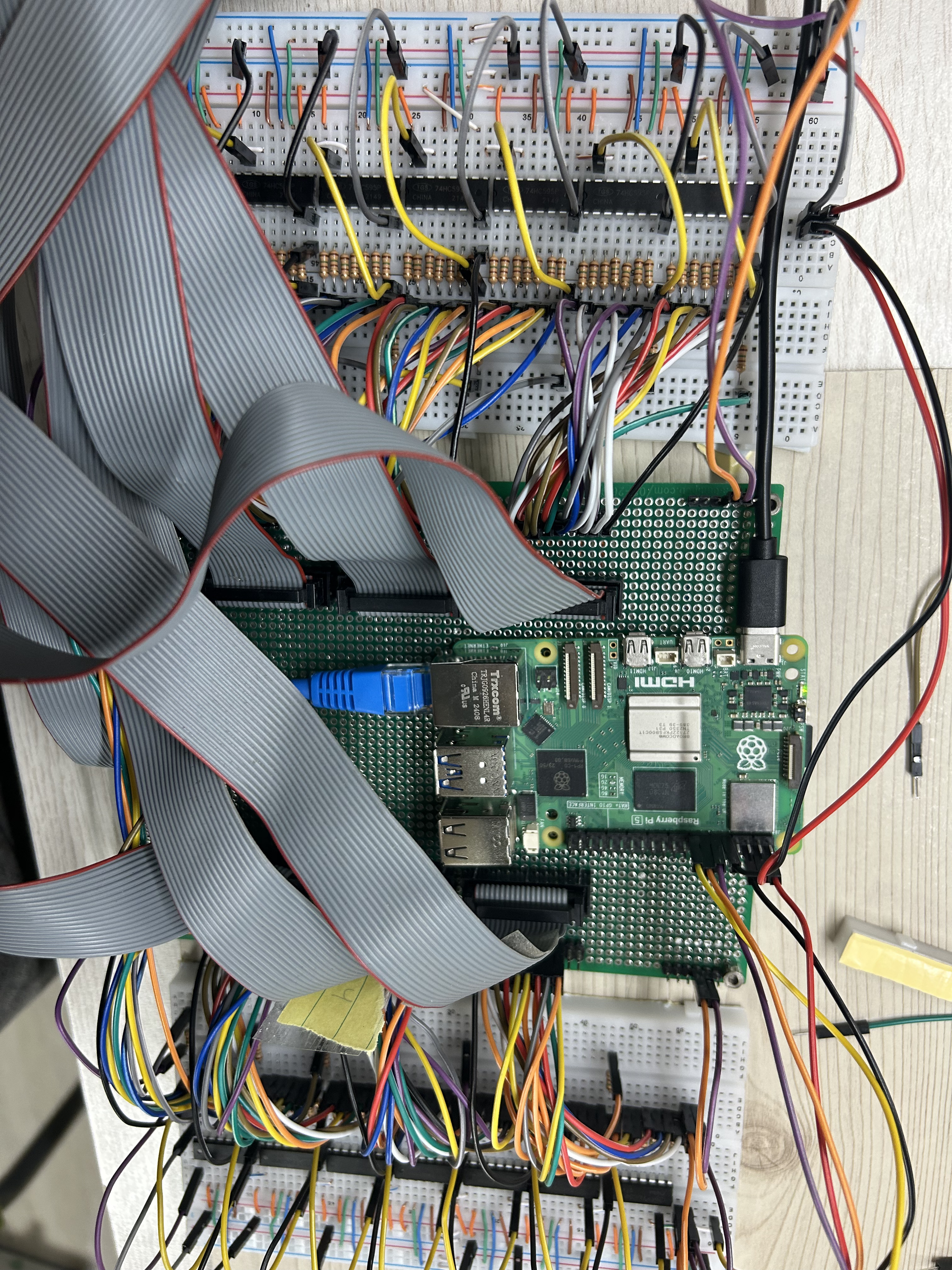
- LED control system, commissioned development, 2025.01 - 2025.02 — Designed and built a 112-channel LED system for a psychology research lab at Kangwon National University. A Raspberry Pi 5 drives fourteen 74HC595 shift registers through CLI and GUI controls. I delivered the hardware, wiring documentation and an operating manual. (assembled system, demonstration)
- Dreamhack, 2025.06 - 2025.12 — Solved 154 pwnable challenges without LLM assistance and ranked in the 200s on the overall wargame leaderboard during that period. Studied memory corruption and mitigation bypasses from user-space programs to Linux kernel privilege escalation, using Docker and QEMU debugging environments across x86, x86-64 and ARM32/64.
- WhiteHat School, 2nd cohort, 2024.03 - 2024.09 — Completed security training at the Korea Information Technology Research Institute (KITRI). Developed the WhiteGang Windows protection project with my team.
Writing
- USB UAC1: from stack corruption to root command execution
- ESP32-S3: network-only exploitation on physical hardware
- From research harnesses to isolated agent operations
Awards and certification
- Silver Prize, student division, Gangwon Cyber Hacking Defense Competition (GCHD) · 2025. KISA President’s Award; pwnable challenges for team 국가권력급ST3P_UP.
- Council Chair Award, CO-SHOW AutoHack · 2024. CAN, RF and IDS challenges for team st3p_up.
- Excellence Award, Chuncheon Public Data Contest · 2023. Data-analysis development for team Green Planet.
- Linux Master Level 1 · 2025. Korea Association for ICT Promotion (KAIT).
Contacts
You can reach me at hataegu0826@gmail.com.